


Criminal Justice, Humanity
A man was released from prison to die. How “compassionate” is it to wait until the end?
Table of contents
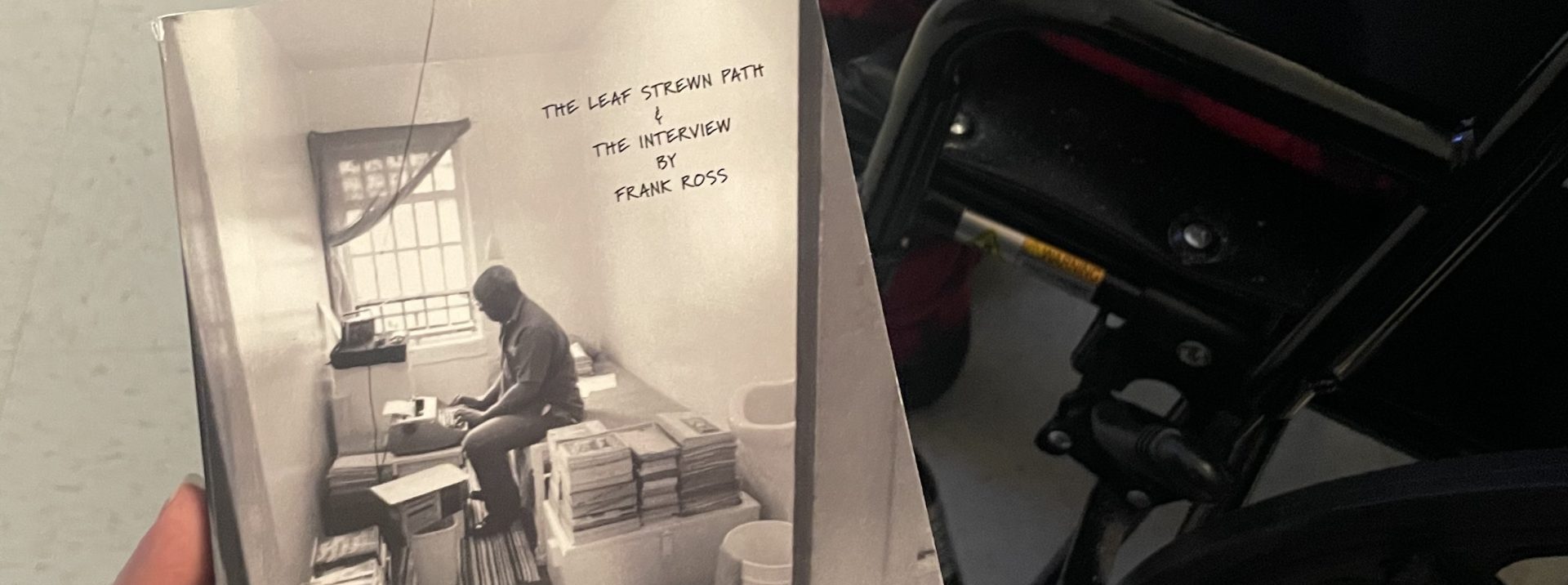
Frank Ross was sentenced to life in prison without parole and incarcerated in a Pennsylvania prison over four decades ago. For the most part, he made peace with the reality that he would grow old behind prison walls and, eventually, spend the end of his life there. What he didn’t plan for was what would happen when he became seriously ill and unable to care for himself in his later years. Or that he would grow so sick as to eventually become one of the rare few people in the state to be approved for a medical transfer out of prison – something commonly known as “compassionate release.”
Last year, doctors deemed it likely Ross could pass away within the year—a mandatory requirement in order to be able to apply for consideration for a medical transfer under Pennsylvania’s compassionate release statute.
Early this year, Ross was transferred from SCI Phoenix to a healthcare facility in Philadelphia. He is one of just 54 people in the last 15 years that the state of Pennsylvania has agreed to release under its medical transfer statute. That came after years of health struggles in prison, a serious health diagnosis and cognitive decline that has developed into dementia.
Ross is representative of thousands of senior citizens who are currently behind bars in prisons all across the United States, and many more others who are currently incarcerated while battling serious health complications without access to the most adequate healthcare.
Inside the prison, Ross was beloved and respected by many. He is a prolific and published writer and helped dozens of younger men learn to read and write during his time in prison. He also served as a mentor and father figure to many of these men in prison, including Luis “Suave” Gonzalez, the main character of the Pulitzer Prize-winning series Suave.
Before his release, Ross depended on the support of other incarcerated men who took on the role of his caretakers. In a wheelchair, and for a prolonged period unable to get out of bed, the men with whom he built bonds over decades in prison tried to make him comfortable.
Now, it’s Suave who is helping family and friends to care for Ross on the outside, visiting him at the healthcare facility daily and often spending the night there to keep him company.
Ross was transferred to an outside healthcare facility where his lawyers and family hope he can receive higher-quality care. But the strict requirements of compassionate release that force applicants to wait until they’re considered “terminal” mean that Ross is now facing advanced health issues that make his return to freedom bittersweet.
The Graying of American Prisons
Ross’ case highlights one of the fastest-growing trends in incarceration in the U.S., which some experts have called “the graying of American prisons.” There are today more seniors in prison than ever before in history.
In fact, the prison population in the United States is aging much faster than the rest of the country. According to the Prison Policy Initiative, older people now make up five times as much of the incarcerated population as they did just 30 years ago. By 2030, about one-third of the U.S. prison population is expected to be over 55 – Due to the deteriorating effects of incarceration on health, people behind bars are considered “geriatric” sooner.
In addition, prison data show that there are now more older people entering the system than there were in the past. The Sentencing Project found that while only 3% of adults arrested in 2000 were aged 55 and older, by 2021 that same group accounted for more than 8% of arrests.
Conditions in prison are dangerous to the health and wellbeing of most people—but even tougher for those who are older. And healthcare for elders in prison is also more expensive.
A 2012 study by the American Civil Liberties Union found that incarcerating elderly people costs prisons—funded by taxpayers—about $16 billion a year. That is, on average, more than double the cost of housing those who are younger.
In Pennsylvania, where Ross was incarcerated, lawmakers say the state spends around $400 million a year on prison healthcare. Advocates say that expanding access to compassionate release to people who are seriously ill but not yet terminal could save the state – and taxpayers– up to $19 million a year.
Longer prison sentences lead to a ballooning of elders behind bars
The spike in the number of elderly behind bars is largely part of the repercussions of the “tough on crime” policies passed over the last several decades guiding policing and incarceration. This includes mandatory minimums, three-strikes laws and other strict sentencing guidelines, which have fueled mass incarceration and have led to people serving longer prison sentences.
One of those people sentenced to a mandatory life sentence is Marie Scott. She never killed anyone, but when she was 19 years old, she ended up acting as a lookout during a robbery where a man lost his life. Pennsylvania law mandated she be charged with felony murder.
On the day Ross got out of prison on compassionate release, Scott was experiencing her second day of freedom at a halfway house on the other side of Philadelphia.
Just a few years prior to her release, Michie was diagnosed with breast cancer while serving time at SCI Muncy. She underwent the painful and complicated treatment while in custody and learned she needed to be a strong advocate for her health if she was going to survive.
Despite having cancer, Scott wasn’t considered terminal by the state of Pennsylvania, so she couldn’t apply for compassionate release. She eventually had her sentence commuted after serving 53 years behind bars. Scott is one of only a few women ever granted commutation in Pennsylvania.
Now on remission and restarting her life on the outside in her 70’s, she shares her insight on the healthcare issues she says plagued an aging population inside the prison where she spent more than two thirds of her life, and the particular health concerns that incarcerated women face.
Months after his release, Ross’ dementia is making things challenging. He finds himself swinging between good and bad days, where he sometimes can’t remember where he is or why he’s there.
This cognitive issue unexpectedly put his freedom at risk after a massive weight loss that led to his mandated GPS monitor falling off his ankle. When the prison came to put it back on, Ross couldn’t remember why he was in the healthcare facility or why he needed to wear the monitor and refused to put it back on. This led Ross’ legal team back to court, to advocate for his condition and to explain to the judge the challenges of advancing cognitive decline – part of the same reason he was released from prison in the first place.
Advocates say that experiences of older and sick people like Ross and Scott are why they are working to change the laws around compassionate release in Pennsylvania.
Now, a bill that attempts to reform the compassionate release system makes its way through the Pennsylvania legislature while, across the nation, prisons continue to become filled with older, sicker people. They are all hoping for a reform that will allow them to seek out better care or, at least, allow them to come out to die with dignity.
Banner photo by Julieta Martinelli/Futuro Media.
Credits
Reporter & Producer
Editor
Managing Editor
Executive Producers
Fact-Checking
Sound Engineer
Music & Scoring
Social Media
Artwork
Production Manager
RELATED STORIES YOU MIGHT LIKE