


Humanity
Released to Die
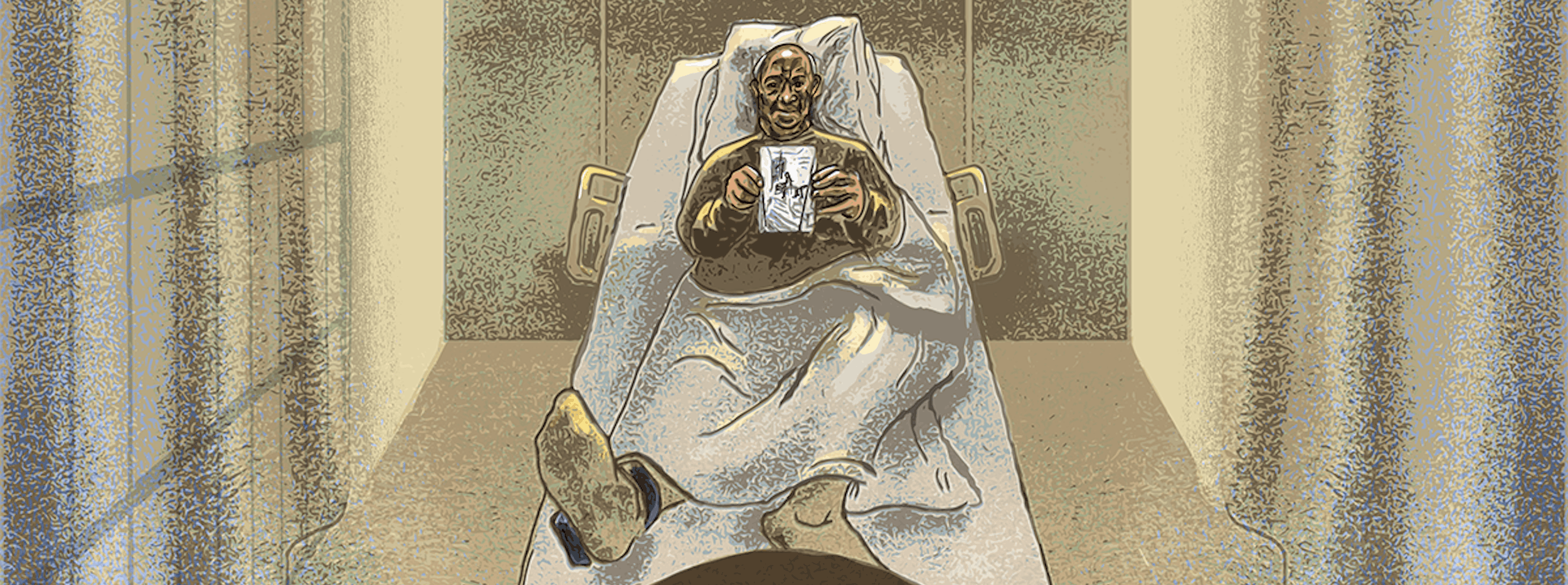
The prison population is aging quickly – there are now more seniors behind bars than ever before. This is a three-part mini-series about growing older – and sicker – in prison, the challenges of accessing necessary healthcare, and what it really looks like to be released under “compassionate release.” We meet Frank Ross, a 93-year-old incarcerated man in Pennsylvania, who gets released from prison after a terminal illness diagnosis. We explore what it really takes to receive compassionate release.
We explore the particular health concerns facing women in prison. We follow the story of Marie Scott, a woman sentenced to life in prison, who, in her late 60’s, discovers that she has breast cancer.
We pick up with Frank Ross, the 93-year-old man granted compassionate release from prison, months after he was transferred to a healthcare facility. After an incident with his GPS monitor, he faces a potential return to prison. And we hear from experts about a potential reform to the law.
This investigation was produced by Futuro Investigates and Latino USA. It was made possible by Public Welfare Foundation.
Criminal Justice, Humanity
A man was released from prison to die. How “compassionate” is it to wait until the end?
Frank Ross was sentenced to life in prison without parole and incarcerated in a Pennsylvania prison over four decades ago. For the most part, he made peace with the reality that he would grow old behind prison walls and, eventually, spend the end of his life there. What he didn’t plan for was what would happen when he became seriously ill and unable to care for himself in his later years. Or that he would grow so sick as to eventually become one of the rare few people in the state to be approved for a medical transfer out of prison – something commonly known as “compassionate release.”
Humanity
Podcast: Released To Die: Episode 1
Frank Ross was sentenced to die in prison – but after decades behind bars, he faces a new shot at freedom. At 93-years-old, Frank Ross is struggling with serious health issues. He’s able to secure a medical transfer to live out his final days at a healthcare facility through a law commonly known as “compassionate release.” Frank’s story is representative of a growing problem in prisons across the U.S., where the number of incarcerated people considered elderly has reached a historic peak. Compassionate release is one of the few options that could help combat the growing number of sick and elderly people.
Humanity
Podcast: Released To Die: Episode 2
Mechie, an incarcerated woman serving a life sentence at a Pennsylvania prison, learned early on that she needed to advocate for her own health behind bars. Over the decades and as she grew older, she says she witnessed many friends grow ill and die behind bars. Then, in her late 60’s, she discovers that she too has breast cancer. As Mechie recounts the challenges of getting older – and sicker – in prison, we explore the particular health challenges that older women face while incarcerated.
Criminal Justice, Humanity
Podcast: Released To Die: Episode 3
After months out of prison, Frank Ross’ dementia has progressed. At times, he can no longer remember why he needs to wear the GPS monitor the law requires, putting his freedom at risk. He is dealing with serious health issues while adapting to his new life at the healthcare facility. While Frank struggles to live out his release in peace, we learn about a bill that advocates and some lawmakers say could reform Pennsylvania’s compassionate release system, easing the state’s financial burden and helping people like Frank whose healthcare needs aren’t being met in prison, to be released sooner.
Credits
Reporter & Producer
Editor
Managing Editor
Executive Producers
Fact-Checking
Sound Engineer
Music & Scoring
Social Media
Artwork
Production Manager