


Climate, Government
Carbon Capture and Storage: An Environmental Solution or Subsidy for Big Oil?
Revelations from my two-year research on this controversial technology
Anyone who first hears about Carbon Capture and Storage (CCS) might think that it sounds exactly like what the planet needs.
That was the case for Ileana Navarro, community organizer and policy associate with the Central California Environmental Justice Network.
“I honestly thought: ‘Wow, this is perfect!’” Ileana told me. “Anything to reduce our air pollution here, that sounds like a good idea.”
Ileana lives in Bakersfield, in California’s Central Valley. I met her in person when I traveled to the area earlier this year as part of my reporting for this story. The region has the worst air quality in the United States, largely due to decades of intensive oil and gas operations. The urgent need for cleaner air has made carbon capture and storage, or CCS, projects appealing, especially as fossil fuel companies promote them as a solution that promises both environmental benefits and economic gains. But does CCS deliver on these promises? The answer is complicated.
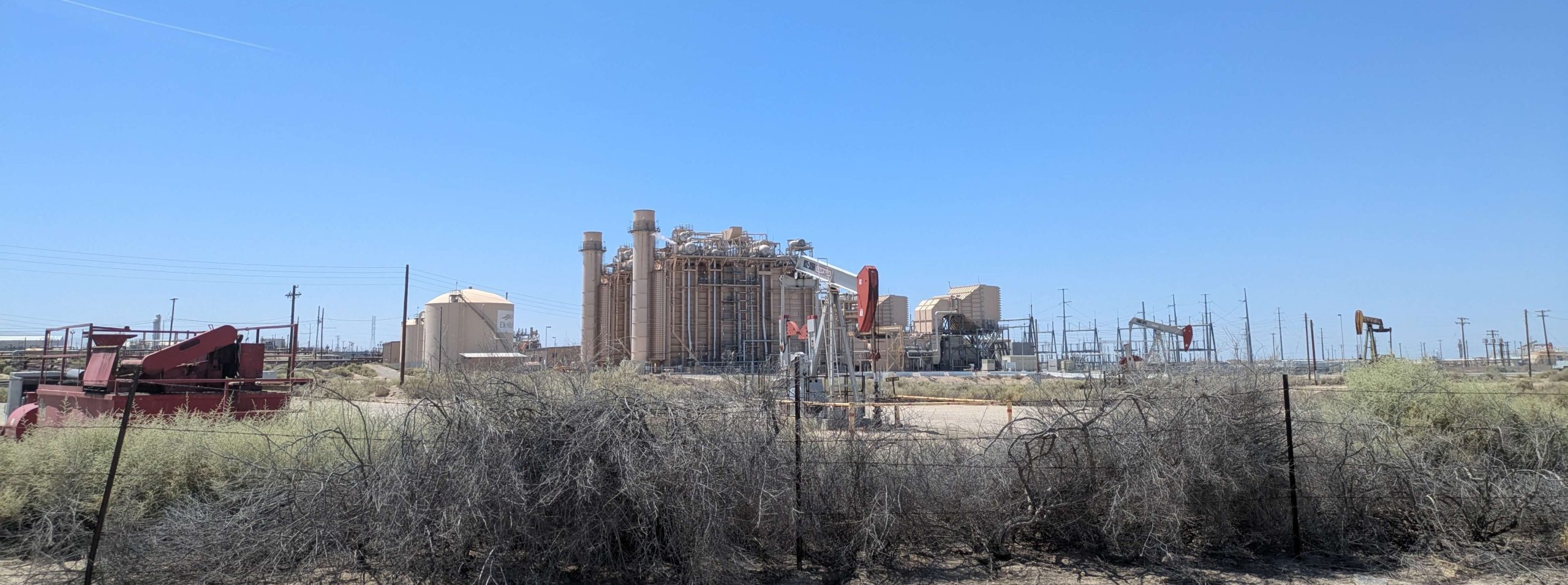
 The Elk Hills Oil Field in Kern County has thousands of wells that have been drilled over a century of operations. Photo by Victoria Estrada
As I began researching CCS —a decades-old technology that remains unfamiliar to many—in 2023, I learned the basic premise: Industrial equipment captures CO₂ emissions at their source, compresses the gas into a liquid, and injects it deep underground for long-term storage. In theory, this process could significantly reduce greenhouse gas emissions by preventing carbon dioxide from entering the air we breathe.
However, in Kern County, where California’s first major CCS project, Carbon Terravault I, is slated for development, a more troubling narrative has emerged. What has been marketed as an environmental solution may function primarily as a subsidy for the fossil fuel industry.
Through in-depth interviews, hours spent attending public meetings, and document analysis, I began to piece together how a federal tax credit called “45Q” incentivizes companies to capture CO₂ not for permanent storage, but for enhanced oil recovery. This process involves injecting the gas into depleted oil wells to extract additional reserves that would otherwise remain inaccessible.
Around 80% of the money claimed under the 45Q tax credit — which was recently expanded by the Trump administration — has been used for enhanced oil recovery. And according to the Institute for Energy Economics and Financial Analysis, this could translate to $800 billion in public subsidies for oil companies over the program’s lifespan. This means $800 billion for more oil extraction, not capture and storage.
For Kern County’s predominantly Latino farmworking communities, this revelation raises serious environmental justice concerns. Local advocates argue that CCS could exacerbate existing pollution while failing to deliver meaningful job creation or lasting ecological benefits.
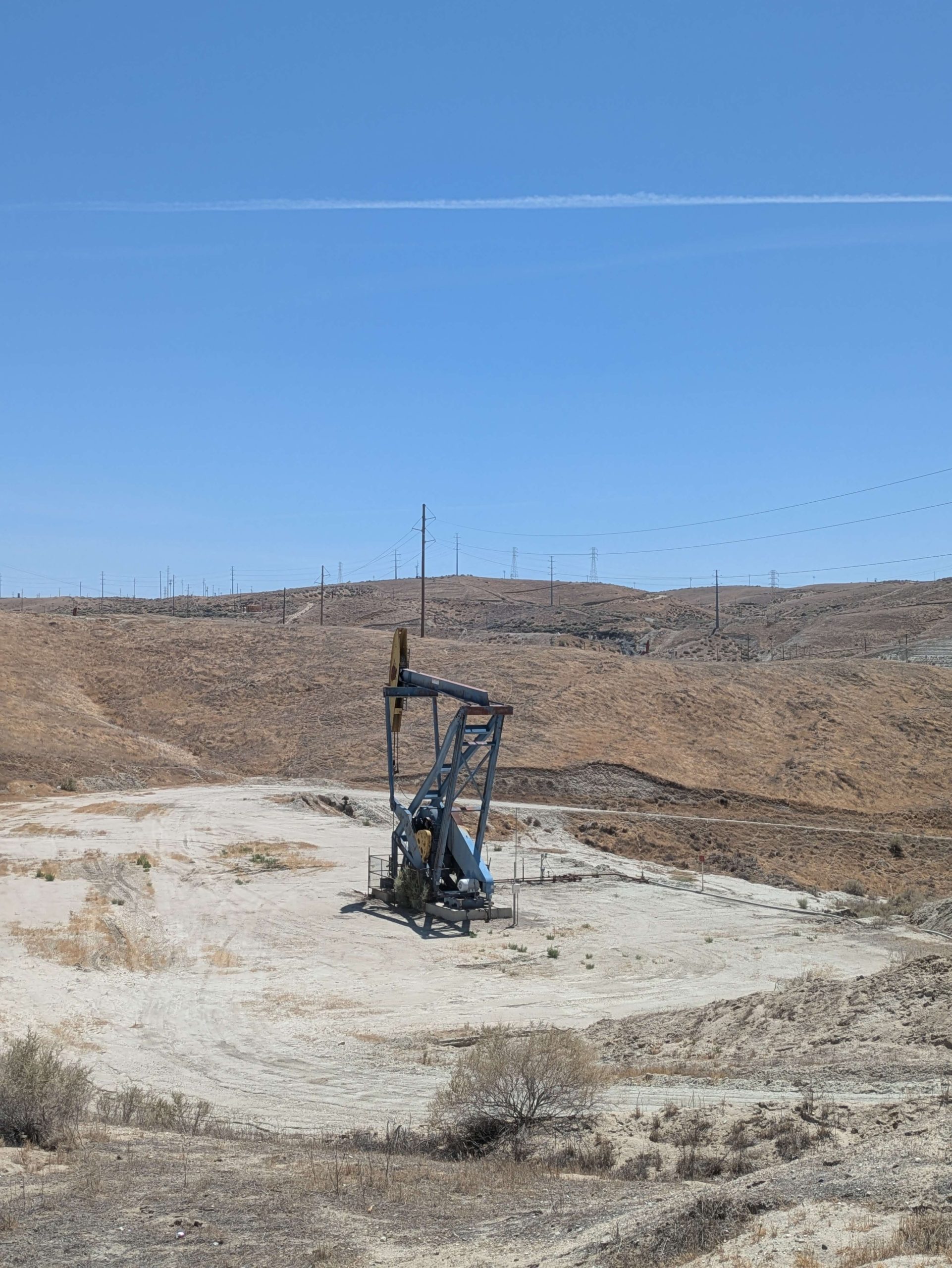
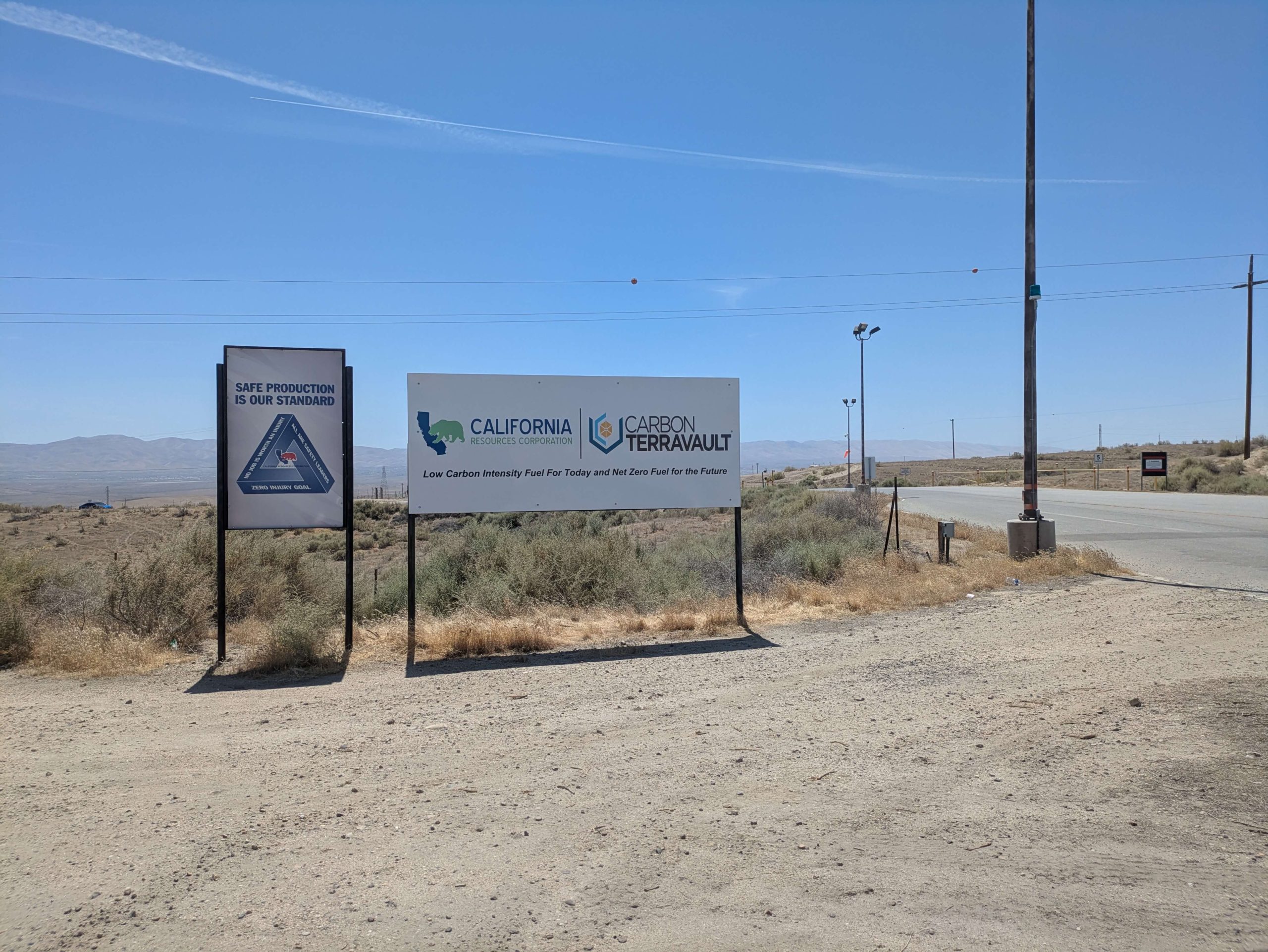 The future site of the Carbon Terravault I carbon capture and storage project in Kern County’s Elk Hills Oil Field. Photo by Victoria Estrada
During my reporting, I visited the proposed Carbon Terravault I project site, located just a couple of miles from a local elementary school. There, I spoke with affected residents, industry representatives, and policy experts. Collaborating with environmental justice organizations provided critical context about the region’s long history of industrial pollution. Meanwhile, a review of Congressional records exposed a stark contradiction: While oil companies publicly promote CCS as a sustainable innovation, internal discussions acknowledge its role in prolonging reliance on fossil fuels.
Further reporting revealed systemic regulatory shortcomings, including inadequate oversight of CO₂ pipelines and gaps in both state and federal permitting processes, which have already resulted in accidents with long-lasting health consequences for communities across the country. All of this underscores how these projects disproportionately impact vulnerable communities already overburdened by the effects of pollution and the climate crisis.
As I began my fieldwork, a surge in ICE raids across California heightened anxieties. Several key sources —individuals directly affected by energy projects— ultimately declined to speak on the record, fearing repercussions from heightened visibility. This painful dynamic highlighted the intersection of environmental justice, immigration policy, and community safety. I compensated for the loss of firsthand accounts by conducting background conversations that preserved the anonymity of sources while ensuring their perspectives informed the narrative. The experience served as a sobering reminder of how systemic vulnerabilities compound—and of journalists’ dual responsibility to uncover truths while minimizing harm to at-risk communities.
The audio piece is the result of a two-year investigation, the publication of which I had to postpone on more than one occasion to accommodate more immediate stories. While this allowed me more time to follow this story and build a clearer picture of the project, it also laid bare a tension in environmental journalism: Stories examining long-term impacts often struggle to compete with the immediacy of daily headlines—even when their consequences will far outlast today’s news cycle.
This report was made possible in part by the Fund for Environmental Journalism of the Society of Environmental Journalists.
Banner photo by Victoria Estrada/Latino USA.
Credits
Executive Producer
Producer
Editors
Fact-checking & Translation
Sound Engineer
Artwork
Project Manager
RELATED STORIES YOU MIGHT LIKE