


Criminal Justice, Government, Immigration
From Colorado’ to CECOT — how unproven gang accusation landed a young Venezuelan migrant in an infamous El Salvadoran prison
Table of contents
19-year-old Nixon Azuaje-Pérez picked up spent bullet casings after a shooting outside his apartment. That one action changed the course of life.
The immigration detention facility in Texas was crawling with federal agents on the day they planned to move the detainees.
“There were the Marshals, there were officers from ICE, the DEA,” Nixon Azuaje-Pérez recalled afterward. “And they were taking pictures with drones, helicopters, everything. It was like a whole movie out there.”
Azuaje-Pérez had found himself at the facility after months of legal limbo, accused by prosecutors in Aurora, Colorado, of tampering with evidence after a gun battle outside his apartment door. Now, he was preparing to be moved, again.
When he boarded the plane, immigration agents were sitting in every other seat.
“‘Where are we going?’” Azuaje-Pérez said he asked them.
The agents told him it was a surprise. “But that we should relax,” he remembers them saying. “That they were going to take good care of us.”
The agents gave Azuaje-Pérez and the other detainees strict instructions to keep the window shades down during the flight.
Their first stop was in Honduras, just to refuel, Azuaje-Pérez recalled. U.S. officials gave the men pizza. Then the plane was back in the air.
Azuaje-Pérez said there was turbulence as the flight prepared to make its second landing. “We lifted up the little window shade,” he said, hoping to get a peek at where they were heading. “And when we lifted the window shade, it said San Salvador International Airport.”
Azuaje-Pérez was one of hundreds of Venezuelan men sent to CECOT, El Salvador’s infamous supermax prison, by the Trump administration in March 2025, accused of being members of an international gang called Tren de Aragua. He was just nineteen years old at the time.
The political pomp and circumstance of the men’s detention in CECOT was well documented — American media rushed to cover the flights, while the El Salvadorean government made sure to send out photos of the prisoners, dressed all in white, wrists in shackles, shaved heads bent low.
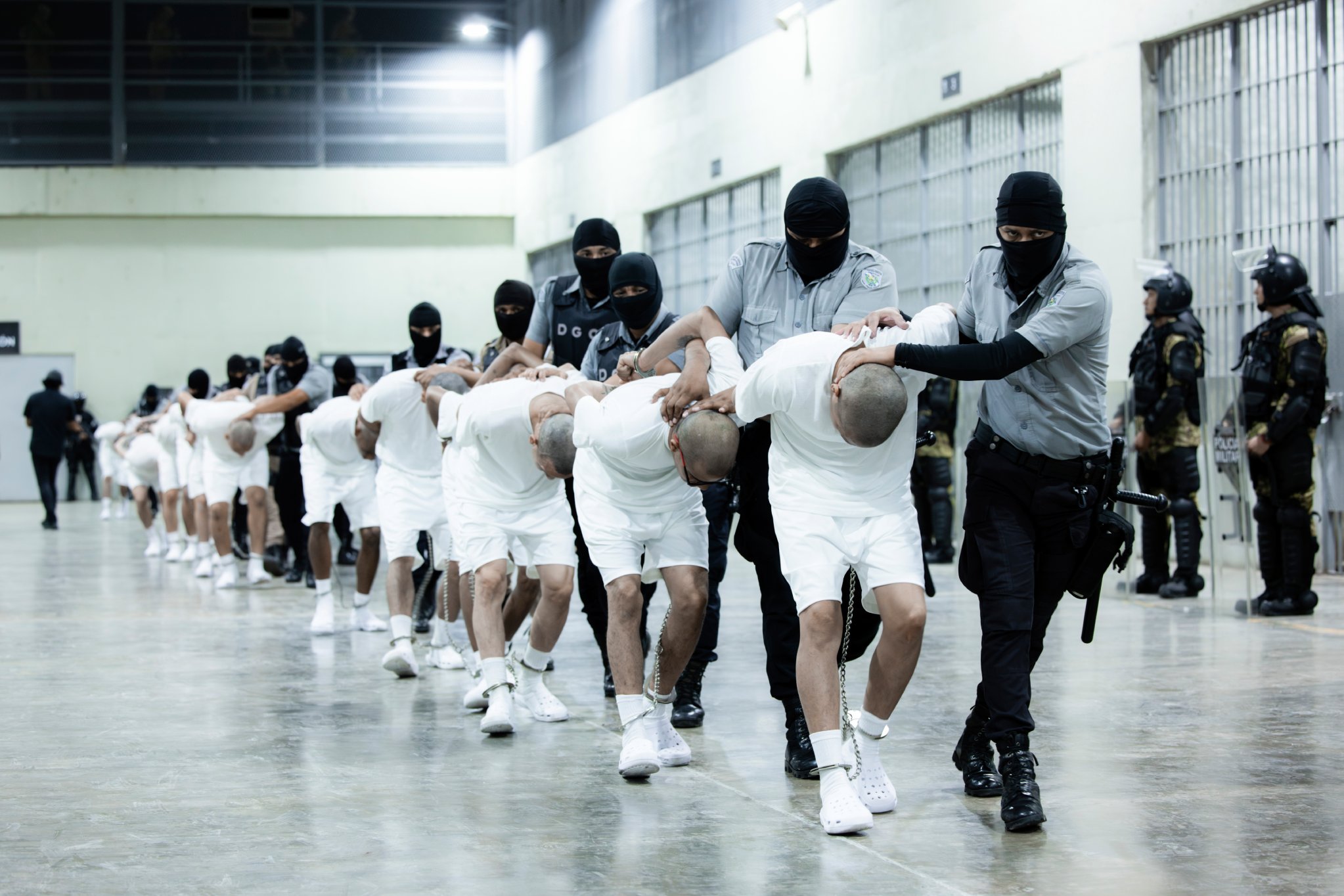
FILE – In this photo provided by El Salvador’s presidential press office, prison guards transfer deportees from the U.S., alleged to be Venezuelan gang members, to the Terrorism Confinement Center in Tecoluca, El Salvador, March 16, 2025. (El Salvador presidential press office via AP, File)
The legal and international drama that followed also played out on the global stage, as President Trump’s fight against a Tren de Aragua ‘invasion’ evolved from a justification for these extraordinary deportations, to justifying the capture of Venezuela’s president and for bombing boats in the Caribbean.
But one enormous question hangs over this very public chapter in the Trump Administration’s immigration crackdown: what evidence was there that the hundreds of men who were sent to CECOT were actually members of Tren de Aragua?
In the case of Azuaje-Pérez, a year of investigation, across two continents, suggests the answers may lie in a long and dangerous game of telephone, where whispers about his alleged ties to the gang passed between local and federal law enforcement; politicians and business leaders; and, eventually, changed the course of his life.
He thought he’d found community. Instead, he was accused of being part of a ‘gang’ invasion
Azuaje-Pérez’s supposed connection with Tren de Aragua started with his address: a hulking beige apartment block its Spanish speaking residents called La Nome. It sits on North Nome St., just steps away from the infamous Colfax Avenue, where downtown Denver dissolves into its eastern neighbor.
During the summer of 2024, La Nome and other dilapidated complexes owned by the same landlords became central to claims that Aurora, Colorado’s third largest city, had been overrun by the violent Venezuelan gang known as Tren de Aragua, or TdA.
“They’re taking over buildings,” Trump declared from the debate stage that fall. “They’re going in violently.”
By the time Azuaje-Pérez moved into La Nome in the winter of 2023, he’d already been in the United States for about six months. He’d left Venezuela as a young teen, with his mother and brothers, first trying to make a life in Peru, before travelling the dangerous route north to the U.S. The family crossed in Texas but almost immediately headed from there to New York City. But their living situation in New York fell apart quickly and Azuaje-Pérez found it hard to do more than just scrape by.
When he heard from a friend in Colorado that the opportunities were better there, he and his brother headed west. They joined dozens of other recent immigrants and asylum seekers who were drawn to the complex in Aurora by its relatively low rent and its willingness to offer leases with few questions.
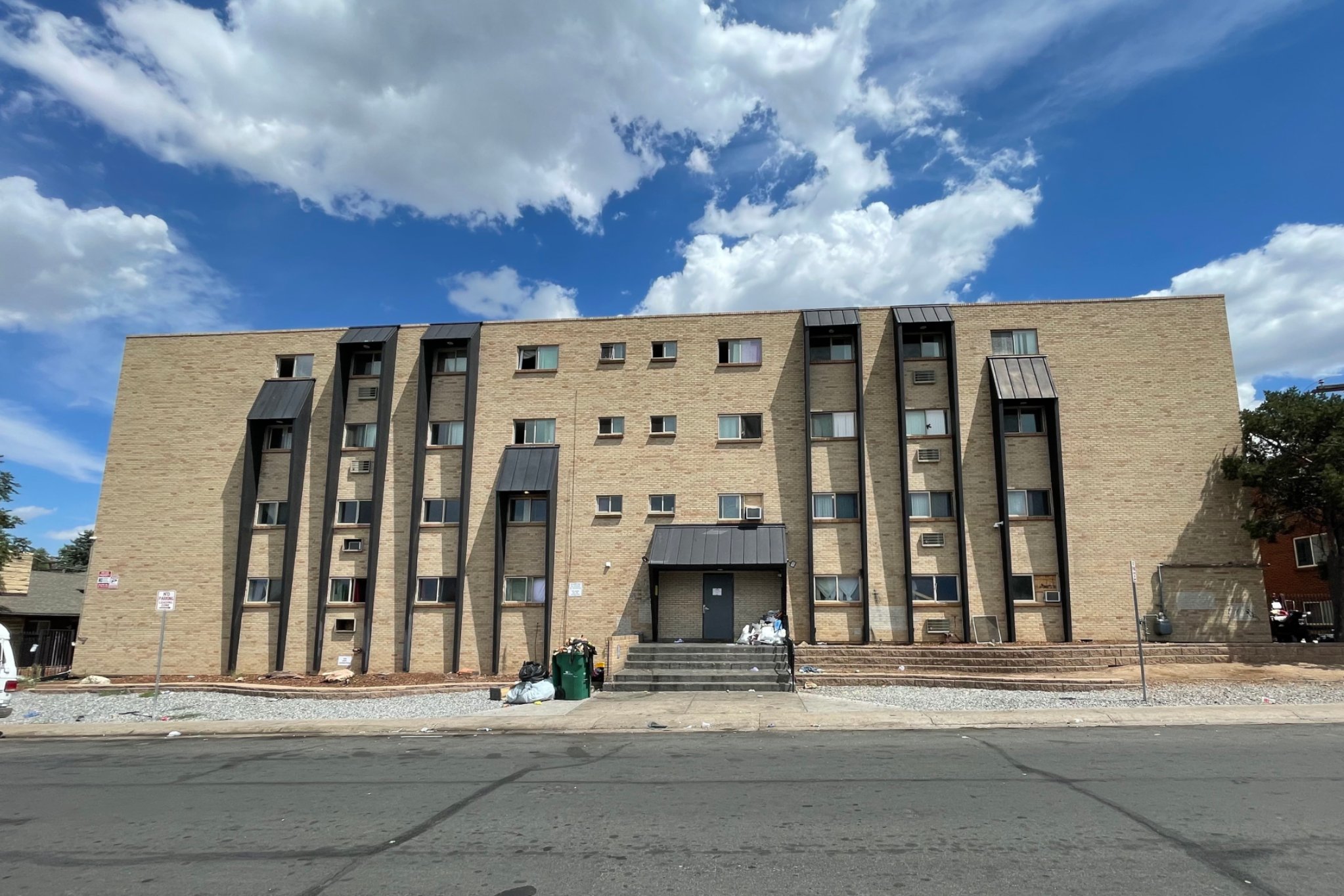 The apartment building at 1568 Nome St. in Aurora was called ‘Aspen Grove’ by its landlords, but many tenants knew it just as ‘La Nome. Photo by Kyle Harris for Denverite.
“In apartment 417, one of my aunts lived there with her family,” recalled Marcos, a former neighbor of Azuaje-Pérez’s in the building, who is originally from Venezuela’s capital, Caracas. “In 318, they used to sell food. I mean these amazing empanadas would show up… Colombian, Venezuelan.”
“It was like showing up and having a little piece of your own country,” Marcos said. He asked to not use his real name in this story out of concerns for his safety.
But La Nome was also seriously run down. Apartments were water-stained and insect-infested, appliances fritzed out and repairs were rarely made. And it was a magnet for trouble. Marcos remembers the piles of trash, addicts strung out in the lobby, and the building managers who stopped coming around.
That all caught the attention of local and state law enforcement, who zeroed in on the building as they searched for stolen cars and responded to violent crime. Eventually, word began to circulate within the Aurora Police Department that one gang in particular might have gained a foothold at La Nome: Tren de Aragua.
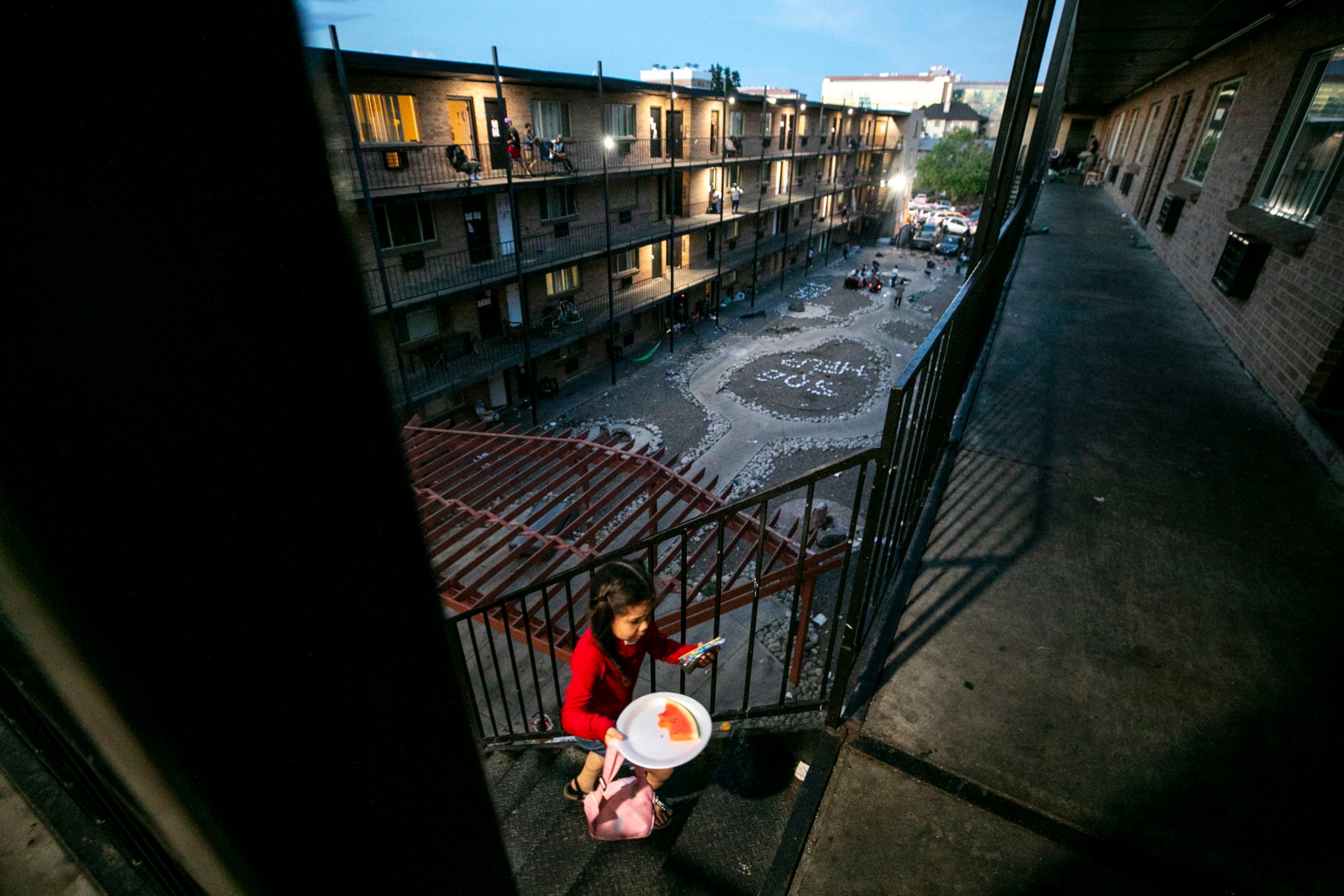 A girl walks up the stairs in the Aspen Grove apartments, Aug. 12, 2024, shortly after the city condemned the building and ordered residents to leave. Photo by Kevin J Beaty for Denverite.
The whisper game begins
APD officers were dispatched to La Nome at 4:31 am on the morning of July 28, 2024. Multiple callers had reported people shooting at each other from outdoor walkways on the first, third, and fourth floors.
Azuaje-Pérez’s unit was on the third floor, number 311.
“You could hear the shots hitting right in front of the apartments, like: pa, pa, pa,” Azuaje-Pérez said. “And little pieces of brick were falling onto the floor.”
Azuaje-Pérez, who’d been hanging out on the balcony with his brother and another friend, rushed back to his apartment for cover. But before he shut himself in, he noticed spent bullet casings scattered around, right in front of his door.
“Kind of on instinct we said, ‘Let’s throw those down there because the police are going to show up and they’ll blame us,’” Nixon said. “So we threw them downstairs.”
Azuaje-Pérez and his older brother, Dixon Azuaje-Pérez, picked up the spent casings and tossed them to the courtyard below. Then they returned to their apartment and went to bed.
As police went through the building, investigating the gunfight, someone mentioned seeing the brothers getting rid of the shells. An officer reviewed security footage and thought it looked like the two men were intentionally covering for those involved in the shooting. (APD denied CPR’s request for this footage, saying it is part of an ongoing investigation.)
Later that day, the brothers were booked in Adams County Jail for tampering with evidence in connection with an attempted homicide.
Behind the scenes, the City of Aurora had been contemplating closing La Nome due to a litany of unresolved code enforcement violations. The property, the City said, was no longer safe for human habitation. Two weeks after Nixon’s arrest, Aurora Police cordoned off the building and officially shuttered La Nome.
‘Are you in TdA?’
Around the same time Azuaje-Pérez moved into La Nome, an APD officer emailed colleagues that ICE officials believed Tren de Aragua had decided to make Denver its U.S. headquarters, due to sanctuary city policies. Soon concerns about the gang were spilling into public view. A violent robbery at a jewelry store in Denver was blamed on the gang. The owners of La Nome and other buildings claimed in the press that its members had taken over their buildings. Video of gun-toting men in the hallway of one of those complexes made national headlines.
“When I got to La Nome, yeah, I did see that people would say, ‘I’m with Tren,” Azuaje-Pérez’s neighbor, Marcos, said. “But they used it as a shield. ‘I’m with Tren de Aragua,’ so you’re scared of me, when really they weren’t part of or didn’t even know anyone in the organization.”
In September 2024, two months after his arrest, the City of Aurora posted Nixon and Dixon’s mugshots to its website, as part of a post emphasizing the city’s efforts to combat the gang.
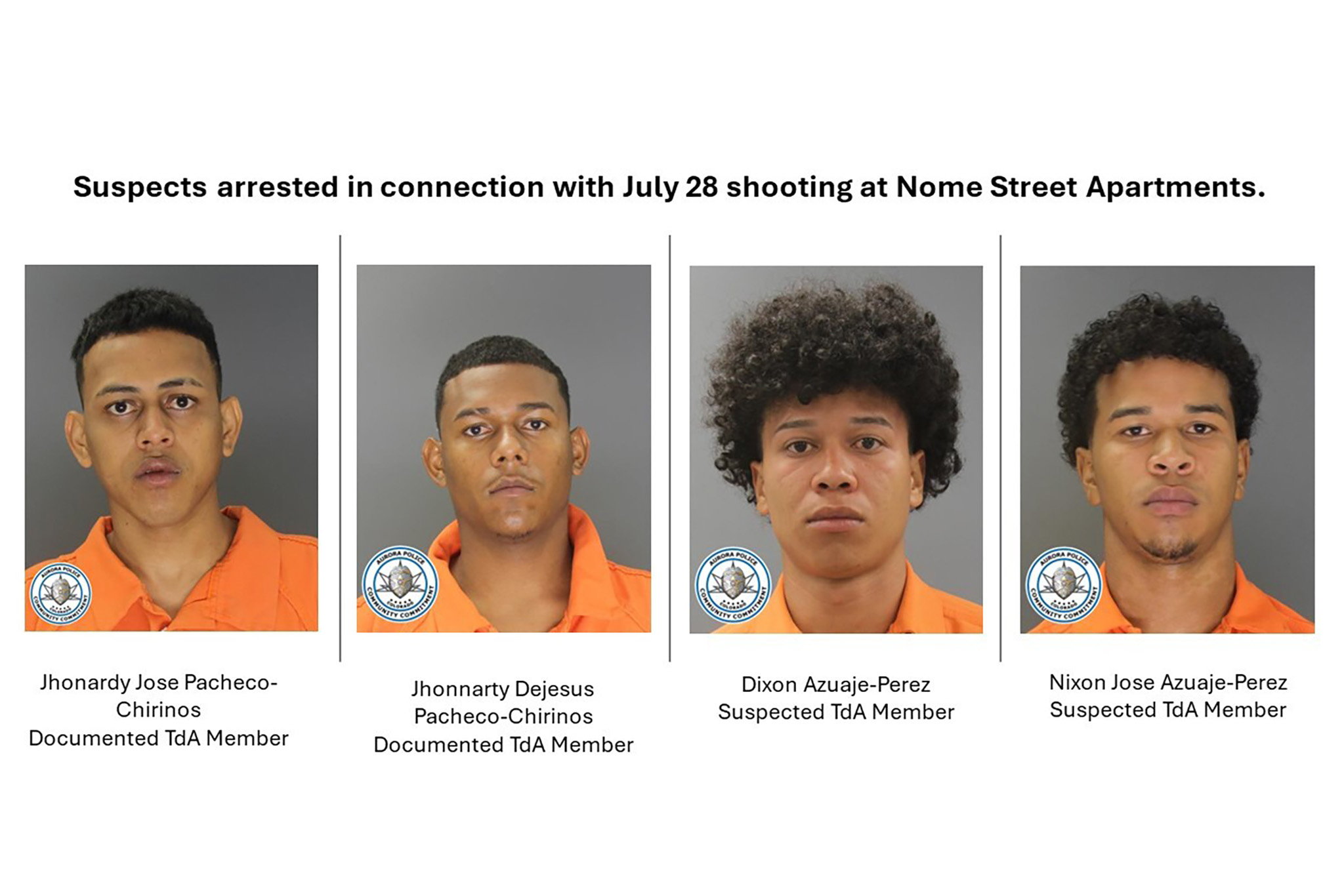 Aurora police handout of the four men arrested in connection with a July 28, 2024, shooting in Aurora. Source by Aurora Police Department.
ICE declined CPR’s requests for any evidentiary material regarding Nixon’s affiliation with Tren de Aragua, and Aurora Police say they never fully vetted him as a member of the gang. Multiple members of the Department, including the Chief of Police, turned down interview requests.
But a former Aurora city council member, Danielle Jurinsky, said that she heard directly from rank-and-file officers that Nixon was not only a member of TdA, but one of its local leaders. John Fabbricatore, the former ICE Field Office Director in Denver, also believes that Nixon was Tren de Aragua, and said he was likely identified as a member of the gang by a confidential informant.
And people were talking to investigators about Tren de Aragua. A police report documenting the questioning of a Venezuelan man several weeks before the shooting at La Nome says he claimed to an Aurora Police detective that 200 TdA members lived in the Denver Metro Area, with more than 30 at La Nome, alone. The report didn’t name names, but 30 people would cover roughly a quarter of the entire building’s residents, according to a tenant list from that year.
Azuaje-Pérez was released on bond after his arrest, but his freedom didn’t last long. When he and his brother showed up to be fitted for ankle monitors, ICE agents arrived and took them into custody.
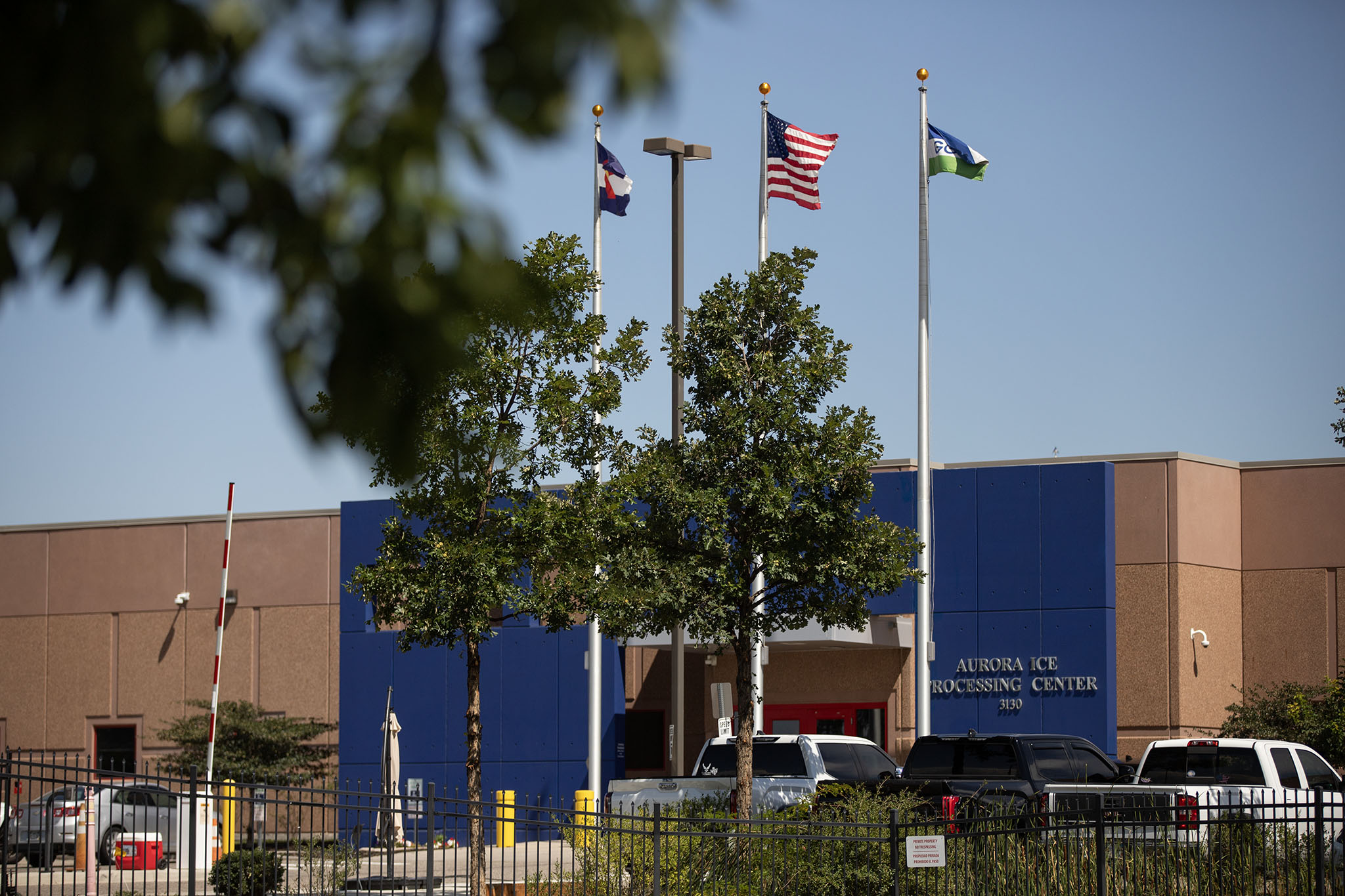
The Aurora Ice Detention Facility, operated by The Geo Group, in Aurora, Colo., on Aug. 25, 2026.
According to Azuaje-Pérez, Aurora Police Officers came to visit him twice while he was in the state’s only immigration detention center, GEO. On one occasion, he said an officer asked him where he was from.
“Guanare, in the state of Portuguesa,” Azuaje-Pérez told him.
The detective pulled up Guanare on a map and then searched for directions to Aragua, as if their proximity might reveal something about Azuaje-Pérez’s ties to Tren de Aragua.
Azuaje-Pérez said ICE agents would frequently pull Venezuelan men out of GEO for interviews and show them notebooks filled with tattoos.
“Rose tattoos, Puma tattoos, Adidas tattoos, Jordan tattoos,” Azuaje-Pérez said. “I mean pretty much every tattoo supposedly signals Tren de Aragua.”
Azuaje-Pérez has a rose tattoo on his forearm with his mom’s name in the middle. He got it when he was 13.

Nixon Azuaje-Pérez displays the tattoo that he got to honor his mother when when was 13 years old. The Department of Homeland Security considers rose tattoos potential evidence of affiliation with Tren de Aragua. Photo by Pedro Concepción for Futuro Investigates.
A rose tattoo could score suspected TdA members four points on the Alien Enemy Validation Guide, a form DHS created to help guide investigations. Other things that counted against suspected gang members included law enforcement intelligence reporting. That counted for four points. And testimonies from informants, which counted for three.
“Aliens scoring eight points or higher,” the form says, “are validated as members of TdA.” With his tattoo alone, Azuaje-Pérez was halfway there.
Nixon said one of the guys who worked for GEO had three Jordan tattoos of his own. Venezuelan detainees would joke around, “Are you in TdA?” they’d ask him.
“No,” he’d say, laughing. “You guys are in TdA.”
The justice system can’t keep up with the rush for deportations
Over the past two years, U.S. law enforcement has continued to pursue Tren de Aragua in Colorado and around the country, an effort that only ramped up after President Trump, on his first day in office, officially elevated the group from a criminal gang to a “foreign terrorist organization.”
But the United States’ claims about the gang don’t match the reality that some who’ve gotten closest to it describe.
“It’s a model of an organization,” according José Luís Pérez Guadalupe, who ran Peru’s corrections system in 2015 and 2016
A few years ago, he returned to his work inside Peru’s prisons, this time as a chaplain, in an attempt to reduce conflicts between inmates. Pérez Guadalupe immediately noticed something different happening inside the country’s largest prison, Lurigancho. It was filling up with hundreds — and perhaps more than a thousand — Venezuelans.
“That’s when my anthropologist side kicked in,” he said.
Pérez Guadalupe interviewed hundreds of Venezuelan men incarcerated at Lurigancho and then went on to write a book about it called, “El Tren de Aragua.”
What he came to understand was that, within Venezuelan organized crime, there were many “trenes.” Tren de Aragua. Tren del Sur. Tren del Llano. Anti-Tren.
The groups had similar structures and carried out the same types of crimes. They were all getting lumped together by outsiders as Tren de Aragua, but were not actually the real thing.
Last year, Pérez Guadalupe traveled to Chicago, where he spent three months looking for evidence of Tren de Aragua activity.
“I didn’t find the organization itself,” Pérez Guadalupe said. But what he did find, among the thousands and thousands of Venezuelans who’d moved to the city, were some criminals. Possibly even people that, at one point, did belong to some sort of organized crime. But their reach seemed limited.
“There are members of TdA in the U.S.” he said. “But it’s one thing to have a presence. It’s another to have influence, and yet another to dominate the territory.”
“Do they have territorial influence in the criminal world, in the U.S.?” Pérez Guadalupe asked. “I don’t think so,” he said. “Do they have control? Even less so.”
But for federal law enforcement, empowered by a president eager to crack down on a transnational gang he’d highlighted during the election, even the suggestion that a suspect might be associated with Tren de Aragua was enough to earn them a seat on a flight to CECOT.
 President Donald Trump speaks during a campaign rally at the Gaylord Rockies Resort and Convention Center Friday, Oct. 11, 2024, in which he promised an ‘Operation Aurora’ to target members of transnational gangs. Photo by David Zalubowski for the Associated Press.
“You need ghosts and you need enemies,” said Pérez Guadalupe, reflecting on the United States’ approach to Tren de Aragua. “And then you generalize: all migrants are bad, all migrants are criminals, every Venezuelan is a criminal, every Venezuelan is Tren de Aragua.”
The rush to detain and deport suspected TdA members means that in many cases, the government has never had its gang claims tested in front of a jury.
Azuaje-Pérez’s deportation cut short the criminal case against him, which he’d given up fighting after months of postponed court dates. He spent most of the fall and winter of 2024 being shuttled back and forth between Adams County Jail and the immigration detention facility in Aurora. His brother, Dixon, who fought to stay in the country, eventually had the evidence tampering charges lowered to a misdemeanor. He was deported, but not sent to CECOT.
Speaking on the general issue of ICE deporting immigrants with pending charges, Arapahoe County District Attorney Amy Padden complained to CPR that it short-circuited justice for victims.
“When a federal agency’s actions prevent us from performing the job I was elected to do by transporting a defendant with pending criminal charges outside of my jurisdiction and failing to produce him for a scheduled court hearing, this is a major injustice to this community and to the victims impacted by these cases,” said Padden.
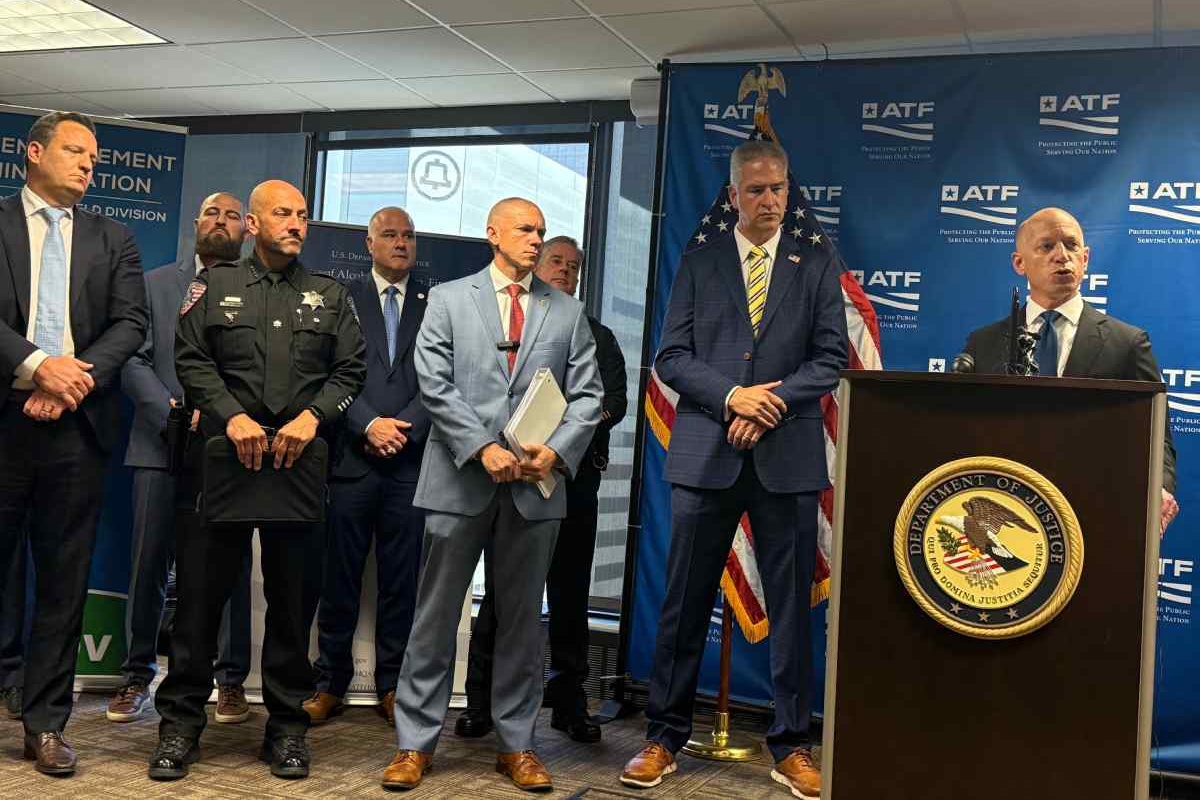 U.S. Attorney for Colorado Peter McNeilly announces a series of indictments in drug and gun cases, while federal and local law enforcement officers stand behind him at a press conference in Denver, August 18, 2025. Photo by Allison Sherry for CPR News.
When prosecutors have taken supposed Tren de Aragua cases through to completion, the results have been mixed. Dozens of arrests connected to a much-hyped criminal ‘ring’ in Colorado have mostly ended in plea deals so far. Separately, three Aurora men recently received long sentences for kidnapping their roommate and trying to get TdA members in Venezuela to help extort money from the man’s wife, but prosecutors did not charge them with being gang members themselves.
Picking up the pieces
Azuaje-Pérez spent 125 days in CECOT.
He describes the massive facility, one of the largest prisons in the world, as brutally hot and minimally designed; “just a shed, like something you’d use to keep pigs.”
He said guards beat him and other prisoners regularly. If he stepped out of line, guards would threaten to hit him until he vomited blood.
“This isn’t the United States,” they’d tell him. “Here in El Salvador, you show us respect.”
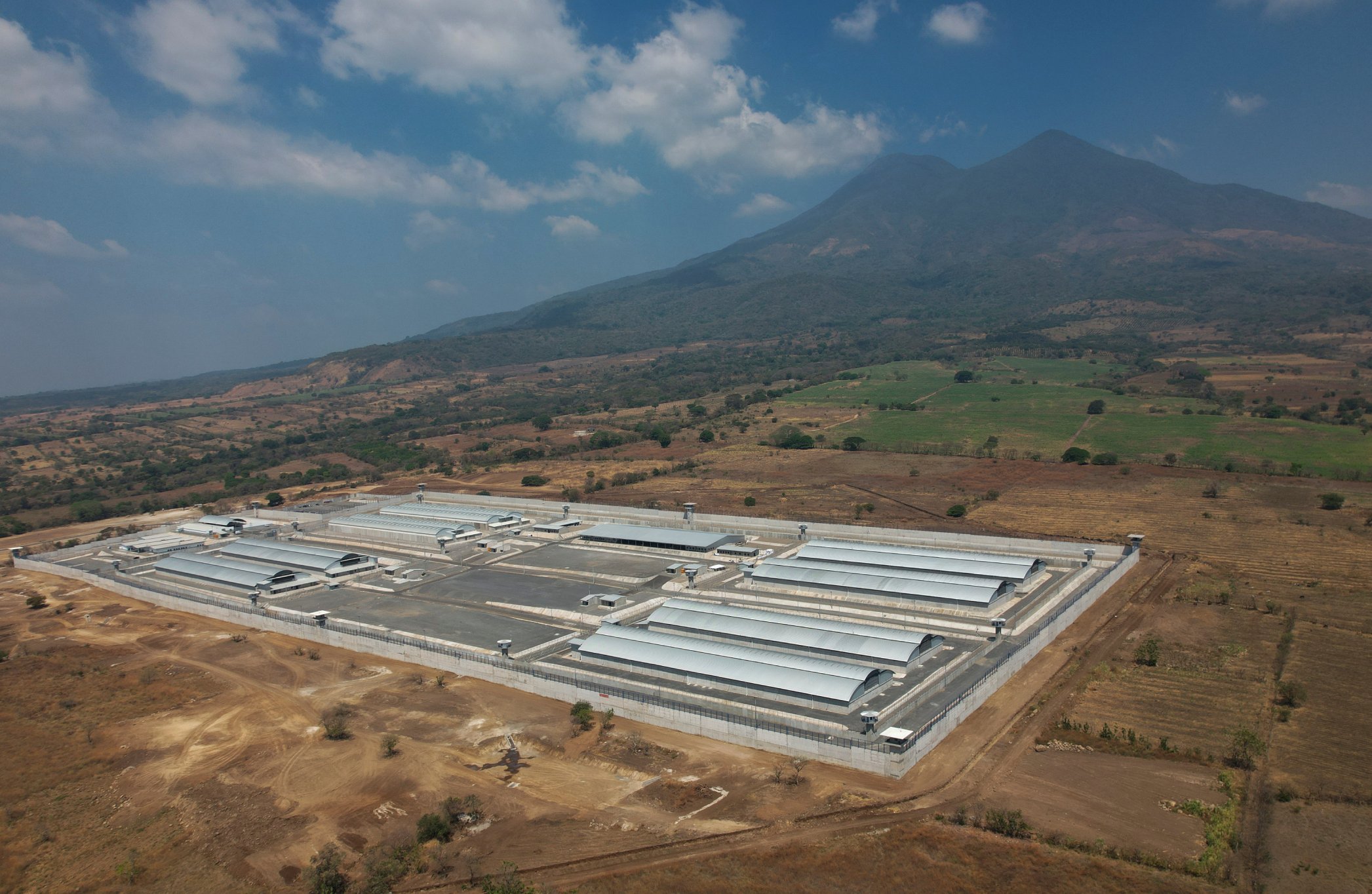
FILE – A mega-prison known as Detention Center Against Terrorism (CECOT) stands in Tecoluca, El Salvador, March 5, 2023. (AP Photo/Salvador Melendez, File)
Over those four months, Azuaje-Pérez gave up hope that anyone was coming to get him out; he believed he’d never see his family again. The guards told him he might someday get out, but it would be in a box, headed to the cemetery.
But the incarceration did eventually end; he was included in a prisoner swap which saw 250 men sent from CECOT back to Venezuela, in exchange for the release of 10 Americans.
Azuaje-Pérez didn’t stay long in Venezuela; the poverty and lack of opportunity that forced his family to leave when he was a young teen hasn’t improved.
He now lives just outside a major city on Peru’s coast called Trujillo. It’s the last place he lived before making the journey north to the U.S. There he was reunited with his brother, Dixon, and the two live together in a small concrete house in a neighborhood where many of the other homes are abandoned. Azuaje-Pérez helps pay for it by working a construction job for about $30 a day — the same one he had when he was 14 years old.
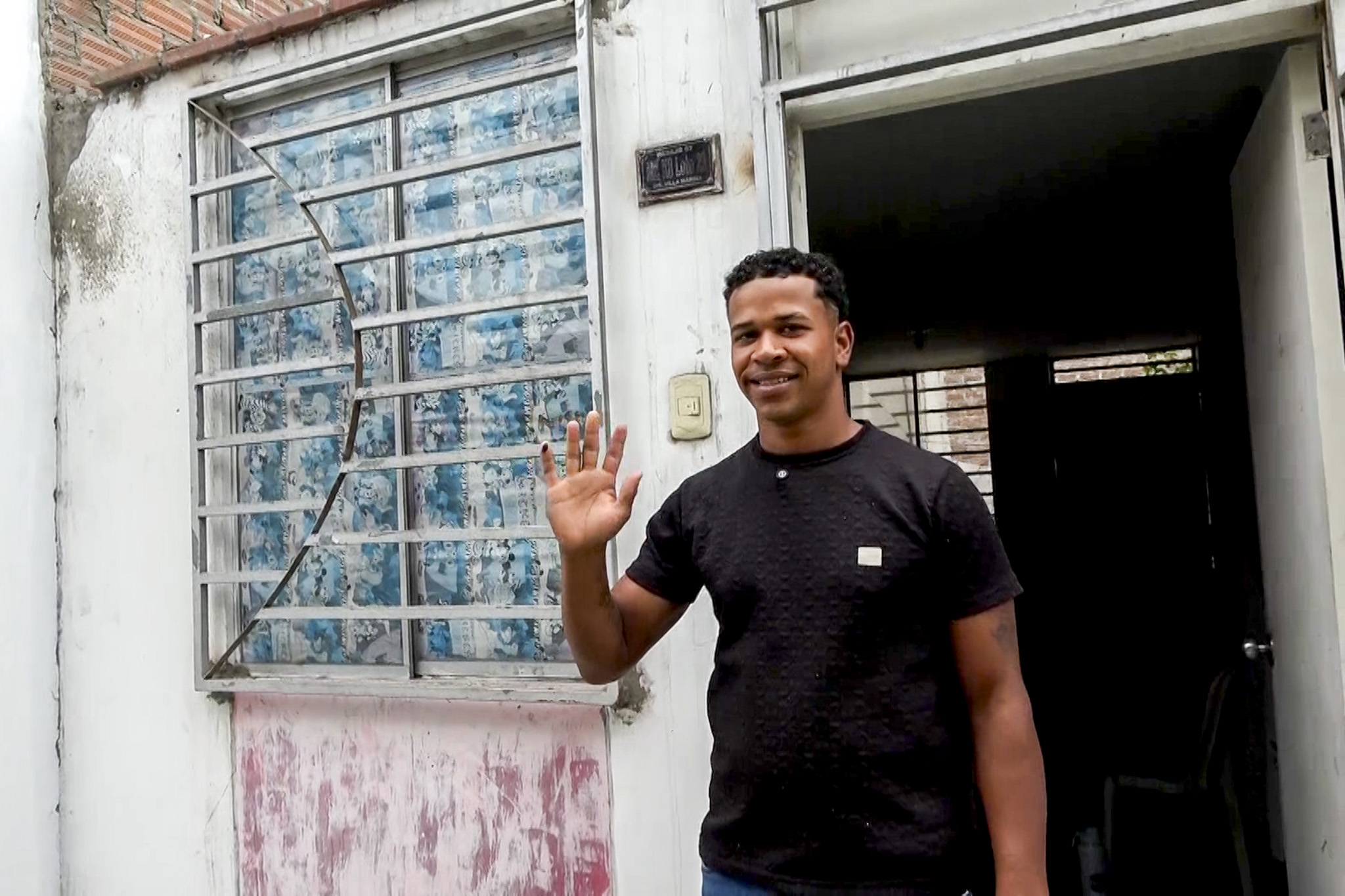
Nixon Azuaje-Pérez outside the home he shares with his father and brother in Trujillo, Peru. Photo by Pedro Concepción for Futuro Investigates.
More than two years after he was arrested in Aurora, Azuaje-Pérez continues to maintain that he was never a member of Tren de Aragua.
But he’s been changed by his time in CECOT; he said he’s colder and harder now. When he’s doing construction, working up high, he’s not scared about whether he stays on top of the building, or whether he falls.
What happened to him preys on his thoughts.
“Sometimes I find myself staring off into space,” he said. “And that’s when my mind starts racing.”
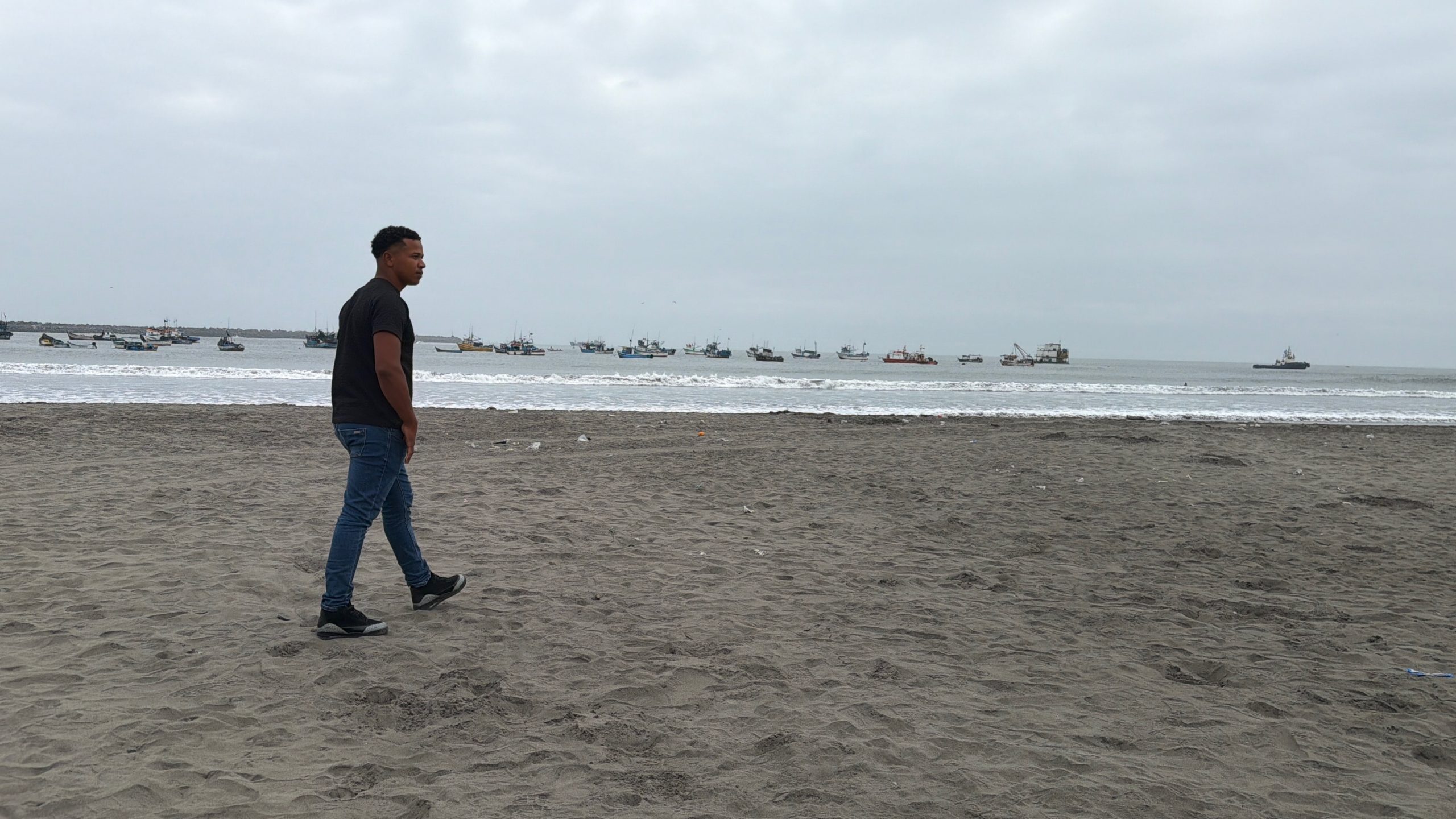 Nixon Azuaje-Pérez visits the waterfront in his adopted city of Trujillo, Peru. Photo by Pedro Concepción for Futuro Investigates.
He feels guilty about his mom and the burden she had to carry while he was incarcerated, left wondering at times whether her son was even still alive.
“It makes me sick,” he said. “Because of that little phrase, ‘Tren de Aragua,’ it caused the consequences of everything.”
Mateo Schimpf has been working in multimedia production since 2017. Mateo spent the early years of his career working on film docs in Latin America before making the full leap to audio journalism in 2020. He was a reporter, producer, and editor for an international news program on KQED-FM in San Francisco before joining Colorado Public Radio.
This article was published in partnership with Colorado Public Radio.
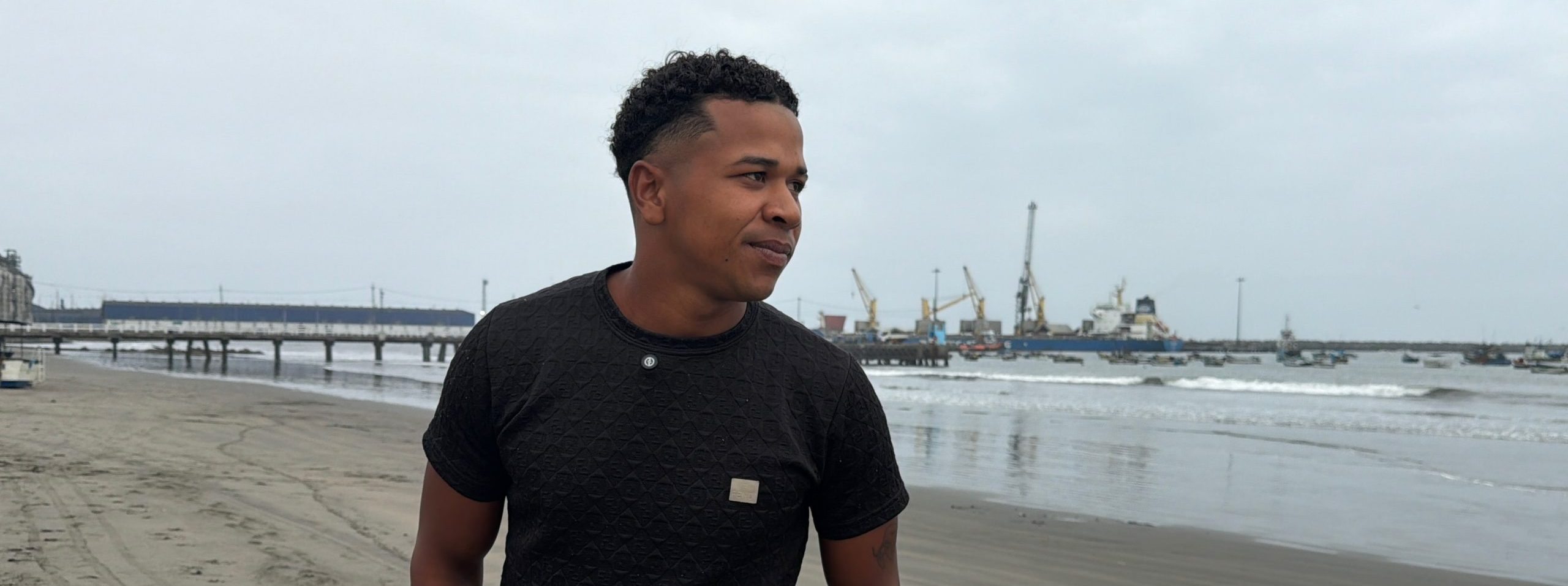
Banner photo: Nixon Azuaje-Pérez. Photo by Pedro Concepción for Futuro Investigates.
Credits
REPORTERS
PRODUCER
EDITOR
EDITORIAL SUPPORT
MANAGING EDITOR
EXECUTIVE PRODUCERS
FACT-CHECKING
MIXING
SOCIAL MEDIA
ARTWORK
PRODUCTION MANAGER
RELATED STORIES YOU MIGHT LIKE