

Reporter’s Notebook
What The Feminist Activists in El Salvador Gave Me: Reporter’s Notebook
Editor’s Note: This investigation was produced by Futuro Investigates and Latino USA and co-published in partnership with El Faro English.
They’re fighting to free incarcerated women in a country where the definition of abortion expands to miscarriages. They gave me hope in a dark extremist time.
It was a regular winter morning in my apartment in Harlem. C my friend from El Salvador, was in my kitchen, and we were chatting over coffee.
C has been in New York City for a decade. She is a housekeeper and lives in Queens with her mom and daughter, we’re only using her first initial. Truth be told, C is a Salvadoran mensch and she knows everyone. She has her ear to the ground about all things Latino. During the last presidential election, she kept me updated on the disinformation that her friends were sharing on WhatsApp.
And that morning over coffee, out of the blue, she said: “Maria, they are putting women in prison in El Salvador.”
It was such a random thing to say between sips of café con leche so I asked her what she meant.
“If women have a miscarriage, they end up in prison,” she explained.
I took a step back and looked at her the way I’ve had before when she would repeat some misinformation she saw online.
“Are you sure that’s really happening? Are you sure that’s really true?,” I asked her.
“A friend of mine in El Salvador told me about it,” she answered.
I was intrigued.
As a journalist, you have to be prepared to find a story at any moment, at any time, even during a relaxing morning coffee. And once you hear that, you start to dig and check the facts.
The best immediate source I thought to reach out to for this was someone I know well: the daughter of former Texas Governor Ann Richards and former president of Planned Parenthood, Cecile Richards.
Richards is an icon in American feminism and reproductive justice. She’s also my friend. I texted her immediately asking if what C was telling me was really happening. To my surprise, Richards confirmed the news C broke to me. I knew then I was about to tell one of the biggest stories we’ve done for the show.
Unfortunately, that was my last text communication with Richards. She passed away in January, just weeks after I texted with her.
*****
After confirming C’s tip, it didn’t take me long to act on it. Just a couple of months later, in March, producer Monica Morales-Garcia and I landed in San Salvador.
My history with El Salvador goes way back.
In 1984, I wrote my college thesis on Salvadoran women refugees on Long Island. A few years later, in 1989, I went to El Salvador for a reporting trip, and then again in 2000.
This time I was there to meet a woman named Teodora Vásquez. She had complications while unexpectedly giving birth alone. Her baby died in the process. She was charged with murder and sentenced to 30 years in prison.
In El Salvador, the government believes that women force themselves to miscarry and therefore are guilty of murder. The government believes that women who deliver alone – because they are poor, live too far from a hospital, or because emergency medical services don’t go to them– choose to have their babies that way. Then, when the baby dies in the process, those women are labeled murderers.
This reporting feels especially relevant today because harsh restrictions on reproductive rights are already in place here in the United States. In Texas, for example, a woman who had a miscarriage at home was charged with tampering with evidence-human corpse when a baby was found in the trash in 2024.
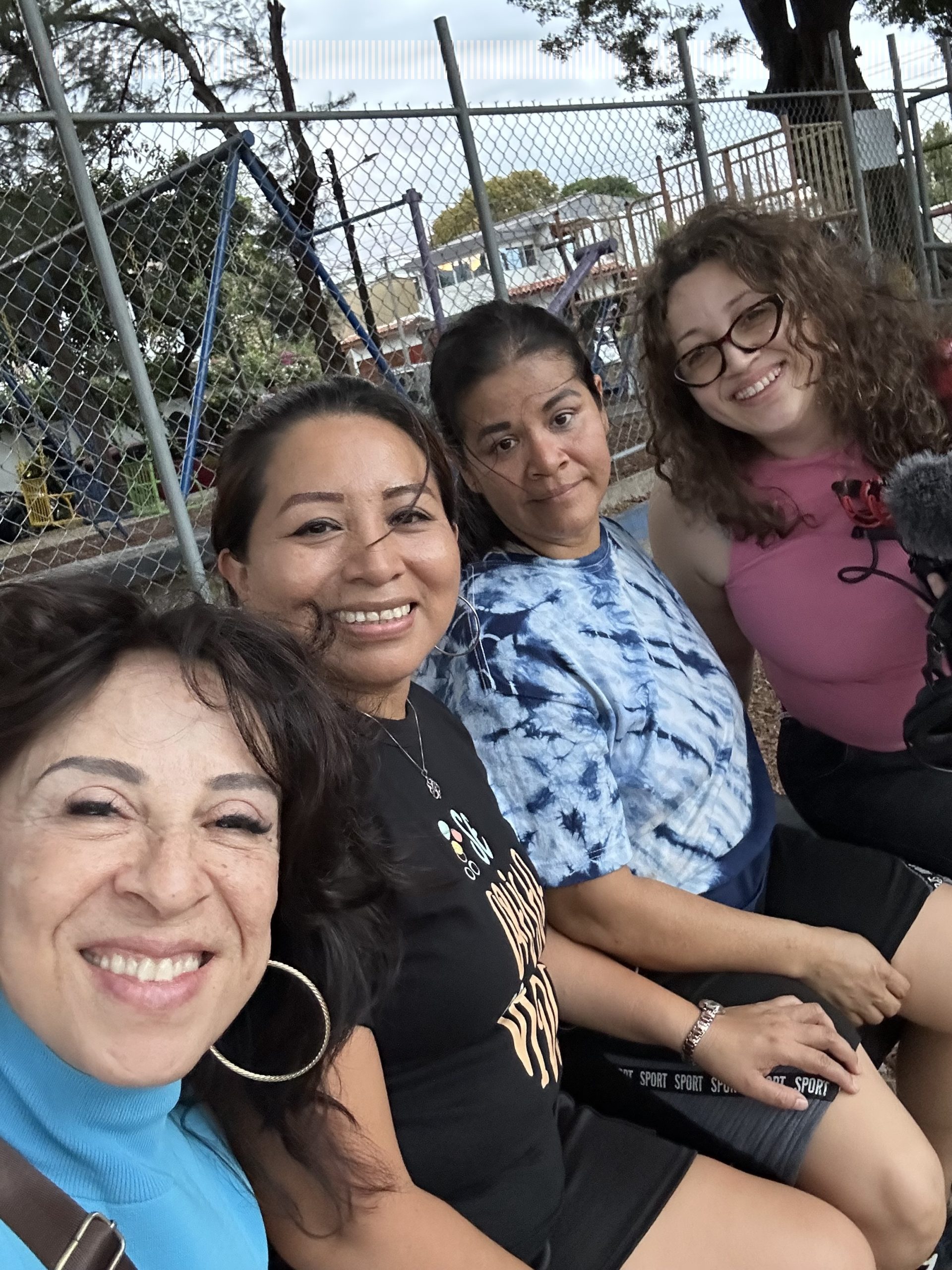 (Maria Hinojosa for Futuro Investigates)
I don’t want to leave you with the impression that this story is only sad or dark. One thing I know about women in El Salvador is that they are strong.
I want you to see the hope in this reporting, the tireless work of feminist Salvadoran activists who have built a whole movement to free women from being wrongfully imprisoned.
And Teodora, she has suffered more than most of us can ever imagine, yet she’s always smiling.
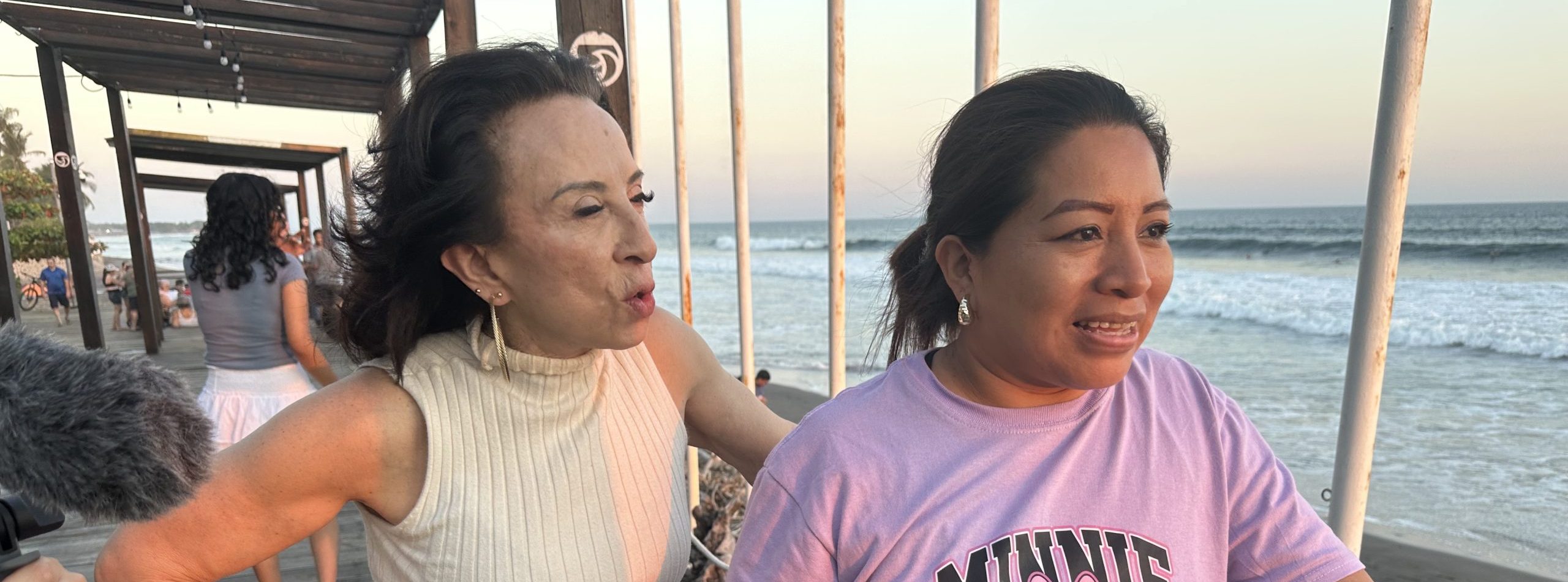
After several days of reporting in San Salvador, I needed lightness. So on our last day there, Monica and I invited Teodora to come with us to the beach. So we drove to the coast of the Pacific, which is only 25 minutes away from the capital. We watched the sunset – an absolutely memorable blood red sunset. And that’s when Teodora told me the last time she had seen a sunset on the ocean was in 1997. That’s almost 30 years. But we didn’t cry about that. Instead, we looked out over the ocean and smiled.
Credits
Reporters
Producer
Editors
Fixer
Executive Producers
Fact-Checking & Translation
Sound Engineers
Artwork
Project Manager
RELATED STORIES YOU MIGHT LIKE